



Understanding the Oxygen Cycle in Lakes
Large waterbodies tend to have periods of hypoxia/anoxia (i.e., low-oxygen), especially at night. During the day, when sunlight is relatively constant, phytoplankton will grow by combining the dissolved carbon dioxide, phosphorus, and nitrogen (ammonia or nitrate) via photosynthesis and release oxygen. With the consumption of dissolved carbon dioxide by the growth of phytoplankton, there will be a deficit of dissolved carbon dioxide in the water which increases the pH of the water as the day progresses; zooplankton do not thrive in high pH environments and swim away to avoid this stress. During the night, the respiration (i.e., consumption of oxygen) of the more abundant phytoplankton, zooplankton, and aquatic animals in the water, along with the aerobic digestion of the accumulated organic sludge at the bottom of the waterbody (i.e., good bacteria that use oxygen as an energy source), will consume oxygen and release carbon dioxide.
The Consequences of Low Oxygen (Hypoxia and Anoxia)
When oxygen is depleted, anaerobic metabolism predominates, which is generally less efficient and results in lower overall metabolic rates in a pond, reduced rates of organic matter decomposition. Anaerobic environments increase the internal load of nutrients due to the reduced ability to retain inorganic phosphorus in the sediment and returns reduced nitrogen forms, such as ammonia/ammonium, back into the water column. This shift in the dominant available N source may give a competitive advantage to cyanobacteria relative to more beneficial forms of algae, like diatoms. Moreover, anaerobic processes contribute to odour and other aesthetic problems. The accumulation of undigested organic matter in sludge creates a reservoir of materials with high biological and chemical oxygen demand. This accumulation of materials with high oxygen demand, and continuous internal nutrient load, can create a perpetual condition of oxygen stress in the pond, and ecosystem function dominated by anaerobic metabolic activities. This sustained anaerobic condition can be detrimental to the health and normal functioning of the freshwater ecosystem and to local economies that rely on its resources (e.g., fishing).
How the EMF Device Restores Ecosystem Balance
Various control strategies to contain toxic blooms have been proposed to date, including chemical and biological treatments. Some of these approaches kill algae, but the biomass decays in deep water contributing to oxygen depletion, while the nutrients are returned to the water column perpetuating eutrophication and the growth of harmful algae.
The EMF device is a solar-powered device integrated into a small buoy (20” cube, < 22 lb), which provides a very low-power (< 1 Watt) stimulus that initiates changes in the liquid equilibrium structure of the waterbody which leads to changes in associated physicochemical properties, including, but not limited to, surface tension and viscosity. A reduction of surface tension and viscosity has shown a doubling in the gas transfer rate – gasses like oxygen and carbon dioxide – across the air-water interface and can treat a large freshwater body (up to 50 acres).
The EMF Device facilitates the movement of gasses across the air-water interface – naturally, given there is a deficit – to restore a healthy functioning ecosystem. During the daytime, the device will accelerate the transfer of carbon dioxide (which is limiting during the day) from the atmosphere into the water, helping to control the pH and prevent it from shifting upwards. As we transition into the night, the device can help accelerate the transfer of oxygen (which is limiting) and minimizes the occurrence of anoxia or hypoxia conditions. Overall, with the balance of movement of gasses in and out of the system, the available phosphorus and nitrogen in the water are converted into the growth of phytoplankton, and the system does not tip into an overly nutrient rich, low oxygen, or high pH environment. In this healthy environment, aerobic bacterial populations are maintained, and nutrients are efficiently processed and channeled into the phytoplankton growth; phytoplankton continue to grow which feed the zooplankton which feed the higher aquatic organisms. This restored equilibrium and trophic cycle can minimize the potential of an algal bloom.
EM Fluids’ technology requires no permanent infrastructure, no external source of power (solar powered), and introduces no chemicals to the water body. Unlike other bloom or eutrophication control strategies, the EMF Device is designed to treat large water bodies in-situ.
Case Study 1:
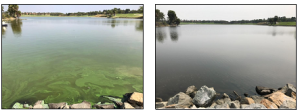
In 2021, water ponds in Thailand plagued by excessive algae, malodors, poor water clarity, and mass fish kills were restored with one EMF device within 2 months to healthy phytoplankton levels and water chemistry (decreased ammonium and phosphorous by 80% and 70%, respectively) and improved clarity. Furthermore, mass fish kills were prevented during the deployment of the EMF Device.
Case Study 2:
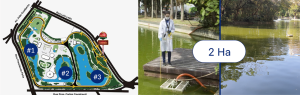
A 5-month installation of one EMF device in a recreational pond managed by one of Brazil’s largest sanitation utility companies (SANEPAR) demonstrated a reduction of 97% in cyanobacteria, 70% in phosphorus, 55% in BOD, 42% in COD, and 56% reduction in nitrogen concentration. This saved SANEPAR more than $60,000 on sludge management cost (dredging, transportation, disposal etc.).
By Kruti Shukla