



Installing Pore Pressure Sensors: Lessons from Past Projects
Introduction
Pore pressure monitoring is a critical component of tailings dam management. Accurate data allows engineers to assess stability, anticipate settlement, and detect potential issues before they escalate. While drilled and grouted installations have long been the standard, hydraulic push-in methods offer a faster, cleaner, and often more representative way to measure in-situ pore pressures. However, reliable data depends on more than just sensor quality — it begins with careful preparation, precise installation, and thorough verification.
Lesson 1: Instrument Preparation and Saturation
Proper preparation of vibrating wire piezometers is essential for accurate pore pressure data.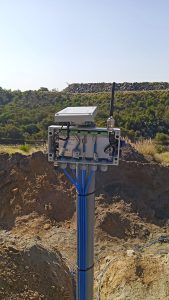
-
Calibration Data: Record all calibration information accurately before installation. This provides a reference for interpreting future readings and ensures any offsets or drift are identifiable.
-
Saturation and Handling: Fully saturate the sensor’s porous filter and internal cavity before installation. Maintaining full saturation throughout handling and the push-in process prevents trapped air that could delay sensor response or distort readings.
-
Zero Readings: After saturation, take a zero (baseline) reading under stable temperature and atmospheric conditions, and allow the sensor to stabilise before logging. Recording this zero accurately forms the foundation for reliable monitoring, as any later deviations can be compared against this baseline to identify sensor drift, installation stress, or other issues.
-
Cable Labelling and Management: When multiple sensors are installed in the same location, clear and consistent cable labeling is crucial to prevent confusion about which sensor corresponds to which depth or position. Strain relief should be applied during installation to reduce stress, and cables should be routed carefully and protected with conduit or sleeves immediately after installation. Accurate labeling saves considerable time and prevents costly misinterpretation of data.
Lesson 2: Correct Push Technique Determines Data Quality
Hydraulic push-in installations require a smooth, continuous push at a controlled rate. Pauses or sudden movement can create voids around the tip or disturb the surrounding tailings, affecting pore pressure readings. Excessive force risks damaging the sensor body or filter, which may result in slow response or unstable data.
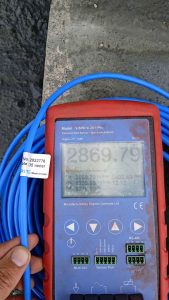
Lesson 3: Real-Time Checks and Post-Installation Verification
After installation, perform a verification check using a handheld readout or connected datalogger. Compare post-installation readings to the pre-installation zero. Unexpected offsets may indicate partial saturation, cable stress, or sensor damage. Documenting these checks provides a reliable QA/QC trail and builds confidence in the integrity of your data.
It’s also important to monitor settlement and consolidation of the tailings after installation. Initial readings may change as the material settles around the sensor tip. Logging these early changes helps differentiate between natural consolidation effects and actual pore pressure trends.
Lesson 4: Integrate Data Early
Once sensors are verified, connect them to your data acquisition system or telemetry platform. Early integration allows continuous, real-time pore pressure monitoring and helps engineers track trends, assess settling, and respond proactively to changes. Monitoring settling over the first few days or weeks after installation ensures that sensor readings are fully representative of in-situ conditions.
Conclusion
Reliable pore pressure data is the product of meticulous instrument preparation, precise hydraulic installation, careful verification, and robust data management — not just high-quality sensors. At SME Monitoring, our experience with tailings facilities has honed practical methods for deploying vibrating wire piezometers, integrating telemetry systems, and hosting accurate, actionable data on our SMEData platform. By following these lessons from past projects, engineers and site operators can maximize both the quality and utility of their pore pressure monitoring programs.