


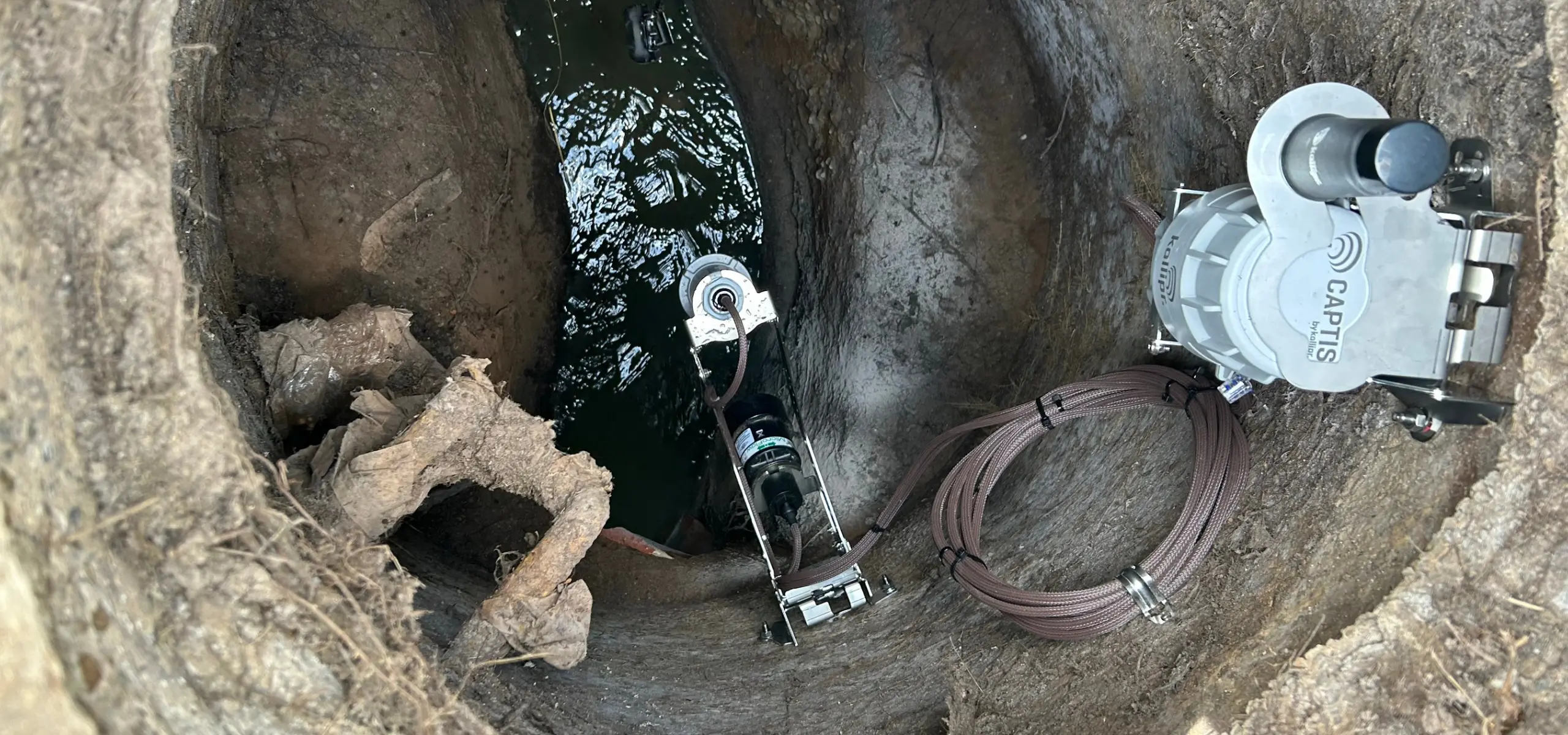
Real-Time Wastewater Sewer Monitoring for Overflow & I&I Detection
Sewer networks rarely fail without warning. The problem is that without real-time wastewater sewer monitoring, these warning signs remain hidden underground until they become environmental incidents, customer complaints, or emergency callouts.
Before an overflow occurs, there are usually signs:
- Rising wet well levels
- Surcharging during rainfall
- Slow drainage recovery
- Repeated blockages
- Increasing pump runtimes
For municipalities and wastewater operators, modern sewer monitoring is no longer just about alarms. It is about understanding how the network behaves over time so problems can be identified earlier and maintenance can be prioritised more effectively.
Why Wastewater Sewer Monitoring Matters
Many wastewater networks are operating under increasing pressure from:
- Aging infrastructure
- Population growth
- Urban expansion
- Stormwater inflow
- Inflow & infiltration (I&I)
- Extreme weather events
At the same time, maintenance teams are expected to manage larger networks with tighter budgets and fewer resources.
This makes reactive maintenance increasingly difficult.
By implementing real-time wastewater sewer monitoring, operators gain visibility into network performance before failures occur.
Detecting Sewer Overflows Before They Happen
One of the biggest advantages of sewer level monitoring is early overflow detection.
In many cases, sewer overflows are preceded by:
- Gradual level increases
- Wet-weather surcharging
- Abnormal flow patterns
- Restricted downstream capacity
Continuous monitoring allows operators to identify these conditions early and respond before an overflow event develops.
This is particularly important during heavy rainfall events where response time becomes critical.
Instead of relying on public complaints or scheduled inspections, utilities can monitor high-risk sites remotely and receive alerts when thresholds are exceeded.
Identifying Inflow & Infiltration (I&I)
Inflow & infiltration remains one of the largest operational challenges in wastewater systems.
Cracked pipes, damaged manholes, leaking joints, and illegal stormwater connections can introduce large volumes of groundwater and stormwater into the sewer network.
The result is:
- Reduced hydraulic capacity
- Increased pumping costs
- Treatment plant overload
- Higher overflow risk
Real-time sewer monitoring helps identify I&I by correlating rainfall events with sewer level response.
Sites that show:
- Rapid wet-weather spikes
- Extended drainage recovery
- Elevated dry-weather levels
may indicate excessive inflow or infiltration within that catchment.
This allows rehabilitation efforts to be prioritised using real operational data rather than assumptions.
Remote Sewer Monitoring Improves Operational Visibility
Traditionally, sewer inspections required manual site visits and reactive investigations after problems occurred.
Modern telemetry systems now allow operators to remotely monitor:
- Sewer levels
- Pump station performance
- Overflow events
- Wet-weather response
- Network trends
This provides significantly better operational awareness across distributed wastewater infrastructure.
Remote sewer monitoring also helps reduce unnecessary site visits by allowing maintenance teams to focus on locations showing abnormal hydraulic behaviour.
Harsh Sewer Environments Require Reliable Instrumentation
Sewer systems are challenging environments for monitoring equipment.
Instrumentation must operate reliably in conditions that include:
- High humidity
- Hydrogen sulphide (H₂S)
- Corrosive atmospheres
- Turbulence
- Debris
- Condensation
- Restricted access
These conditions quickly expose weaknesses in poorly selected monitoring systems.
Long-term reliability depends on:
- Proper sensor selection
- Correct installation
- Stable telemetry communications
- Low-maintenance deployment design
In wastewater applications, reliability is often more important than advanced specifications on paper.
Common Technologies Used in Sewer Monitoring
Different monitoring applications require different sensor technologies.
Ultrasonic Level Sensors
Ultrasonic sensors provide non-contact level measurement using reflected sound waves.
Advantages include:
- Reduced fouling
- Simple installation
- Low maintenance requirements
However, performance can be affected by:
- Foam
- Condensation
- Turbulence
- Poor mounting geometry
Radar Level Sensors
Radar technology is increasingly used in wastewater monitoring because it performs well in humid and corrosive environments.
Advantages include:
- Stable measurement
- Improved condensation resistance
- Reliable long-term performance
Radar sensors are particularly effective in enclosed sewer environments where moisture levels remain consistently high.
Pressure-Based Sensors
Pressure sensors measure hydrostatic pressure below the water surface.
These systems can provide accurate submerged measurement but may require more maintenance due to direct wastewater contact.
Installation Quality Directly Impacts Data Quality
Even high-quality instrumentation can produce unreliable data if installed incorrectly.
Common installation challenges include:
- Turbulent flow conditions
- Obstructed sensor paths
- Poor mounting stability
- Incorrect sensor positioning
- Communication signal limitations
Reliable monitoring starts with proper site assessment and installation design.
Because in wastewater monitoring:
Bad installation creates bad data.
And bad data leads to poor operational decisions.
Smarter Wastewater Networks Through Real-Time Data
Continuous sewer monitoring provides more than alarms.
It creates a clearer understanding of how wastewater infrastructure behaves during:
- Dry-weather conditions
- Peak flow events
- Storm events
- Network surcharging
- Overflow conditions
This allows operators to move from reactive maintenance toward proactive network management.
Over time, monitoring data helps utilities:
- Prioritise rehabilitation projects
- Reduce overflow risks
- Improve maintenance planning
- Optimise operational response
- Better understand network capacity limitations
Final Thoughts
Wastewater sewer monitoring is becoming an essential part of modern wastewater infrastructure management.
By combining:
- Reliable level monitoring
- Remote telemetry
- Real-time alarms
- Long-term trend analysis
utilities can improve visibility across sewer networks and respond more effectively to developing issues.
In an industry where hidden problems can escalate quickly, real-time monitoring provides the operational insight needed to make faster, smarter decisions underground. 📡