


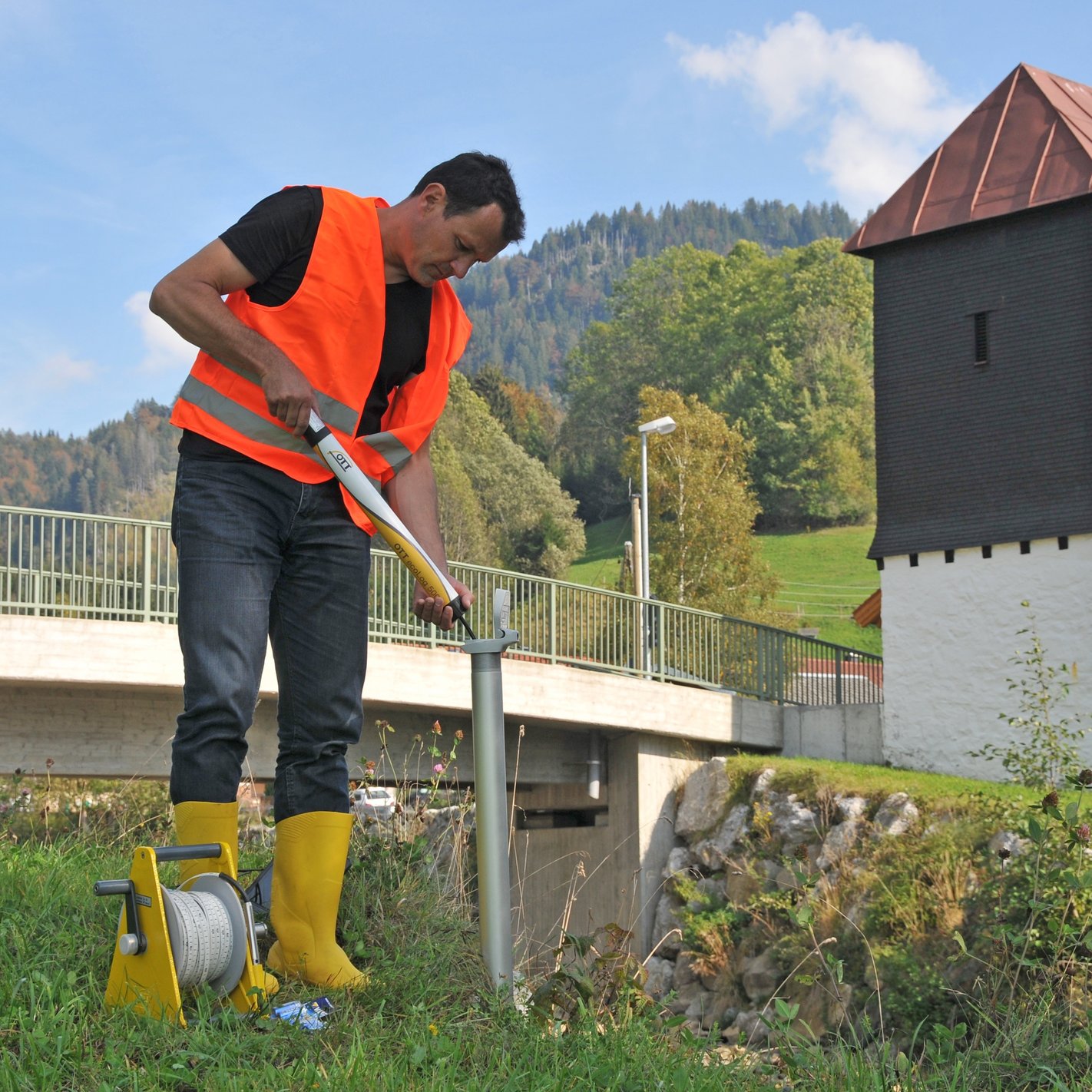
Designing Reliable Hydrological Monitoring Networks with OTT
Reliable hydrological monitoring depends on more than selecting a water-level sensor. A useful monitoring station must produce measurements that are appropriate for the site, preserve data between measurements, communicate reliably, and provide sufficient information to assess the quality of the data.
OTT provides instrumentation and telemetry technologies covering water level, groundwater, flow and discharge, precipitation, meteorology and water quality. Its portfolio combines measurement technologies with data loggers, communications and data-management solutions for applications across the environmental water cycle.
For water-resource monitoring projects, this makes the selection of the complete monitoring system as important as the selection of an individual sensor.
Water level measurement is the foundation
Water level is one of the most widely measured hydrological parameters. Continuous level data can be used for groundwater monitoring, river and reservoir monitoring, flood warning, water-resource assessment and the development of stage-discharge relationships.
OTT offers several approaches to water-level measurement, allowing the technology to be selected according to the physical characteristics of the monitoring site.
Radar level measurement
Non-contact radar measurement is particularly useful where installing a submerged sensor is undesirable or where the water contains debris, sediment or other material that could affect equipment installed in the flow.
The OTT RLS 500 is a radar water-level sensor using 80 GHz radar technology. OTT specifies accuracy of ±2 mm and an 8° beam angle. The sensor measures the distance to the water surface and derives water level from the measurement geometry.
Because the measurement is made above the water surface, radar can also simplify installations where access to the channel is difficult or where equipment needs to be kept clear of the water.
Pressure-based measurement
Vented pressure sensors provide another established method for measuring water level. The OTT PLS 500 is designed for surface-water and groundwater applications and incorporates features intended to support data-quality assessment.
OTT’s documentation describes automatic atmospheric-pressure compensation, internal data processing and built-in QA/QC and metadata functions. The PLS 500 can also process high-frequency measurements into statistics such as averages, minimums, maximums and instantaneous values.
For applications where pressure-based measurement is appropriate, these functions can reduce the amount of processing required elsewhere in the monitoring system.
Groundwater monitoring requires more than a level reading
Groundwater-level measurements are used to identify long-term changes such as seasonal variation, aquifer recharge, declining water levels and saltwater intrusion. For long-term monitoring programmes, the ability to obtain measurements remotely can significantly reduce the number of routine site visits.
The OTT ecoLog 1000 is an example of an integrated groundwater monitoring instrument. It combines water-level measurement, data logging and cellular communication in a single unit. Versions are available with conductivity measurement, allowing water level, temperature and conductivity to be monitored from the same installation.
The ecoLog 1000 supports remote data transmission using HTTP(S), MQTT(S), FTP(S) or SMS, depending on the configuration. It also provides Bluetooth Low Energy connectivity for local configuration and diagnostics using LinkComm.
This type of integrated instrumentation is particularly relevant to distributed groundwater networks where reducing field visits and maintaining data continuity are important considerations.
Flow measurement converts level into water quantity
Water level alone does not necessarily describe how much water is moving through a river or channel. Flow and discharge measurements provide the quantitative component required for applications such as water availability assessment, flood monitoring and water allocation.
OTT’s flow-measurement portfolio includes mechanical current meters, acoustic technologies and non-contact measurement approaches. These technologies can be used for both discrete discharge measurements and continuous flow monitoring.
A key consideration is that continuous discharge measurement normally requires an appropriate relationship between measured hydraulic conditions and discharge. Depending on the application, this may involve a rating curve or direct velocity and cross-sectional measurements.
The OTT PLS 500, for example, can calculate discharge from a user-defined rating table or an ISO 1100-2 exponential formula configured through SDI-12.
For more complex or dynamic channels, acoustic Doppler and surface-velocity technologies provide alternative approaches. The choice depends on channel geometry, hydraulic conditions, sediment, debris, access and the required measurement uncertainty.
Precipitation measurements add catchment context
Rainfall is an essential component of hydrological monitoring because precipitation influences runoff, groundwater recharge, reservoir inflows and flood conditions.
OTT’s meteorological portfolio includes precipitation measurement technologies such as weighing gauges and laser disdrometers. These instruments are designed for applications where accurate precipitation data are required, including watershed monitoring and hydrological modelling.
Radar-based precipitation sensors are another option. The Lufft WS100, for example, uses 24 GHz Doppler radar to detect precipitation and measure the speed of condensed water particles. It can detect rain, freezing rain, hail, snow and sleet.
Combining rainfall and water-level measurements can provide considerably more information than either dataset considered independently. Rainfall data can help explain changes in river stage, support flood-warning decisions and improve understanding of catchment response.
Telemetry is part of the monitoring system
A technically accurate measurement has limited practical value if the data cannot be retrieved reliably.
OTT’s monitoring architecture therefore extends beyond sensors to include data loggers, communications and data-management systems. OTT describes the data logger as the central component of a monitoring station, responsible for tasks such as storing measurements, calculating parameters and transmitting data.
Telemetry also changes the way monitoring networks are maintained. Instead of relying entirely on scheduled field visits, operators can receive data remotely and identify problems before travelling to the site.
The OTT ecoLog 1000 provides an example of this approach at the instrument level, while OTT’s wider portfolio includes dedicated data-loggers and telemetry systems for more complex monitoring stations.
For remote monitoring, however, communications should never be treated as an afterthought. Network availability, antenna installation, power consumption, transmission frequency, data storage and local buffering all affect the reliability of the complete system.
Flood monitoring demands timely data
Flood monitoring illustrates why measurement, telemetry and data management need to be considered together.
A flood-warning station may combine a water-level sensor with precipitation measurement, a data logger, remote communications and an alerting or data-management platform. OTT’s flood-monitoring systems use this type of architecture to provide remote measurements and threshold-based notifications.
The OTT FMS Flood Monitoring System, for example, integrates an OTT RLS 500 radar level sensor with an OTT SensorLink 1000 IoT device, providing a compact system for surface-water level monitoring and telemetry.
The technical objective is straightforward: obtain dependable measurements, transmit them promptly, and make the resulting information available to the people responsible for responding to changing conditions.
Data quality remains fundamental
Remote monitoring does not eliminate the need for good measurement practice.
Sensor selection, installation, reference levels, calibration or verification, environmental conditions, power supply, communications and data handling all contribute to the quality of a monitoring record.
OTT’s own technical material emphasises QA/QC and the importance of verifying measurement performance. Its PLS 500 documentation, for example, incorporates sensor status information and metadata intended to support remote assessment of sensor performance.
For long-term monitoring networks, data quality should therefore be considered at three levels:
- Measurement quality: Is the sensor appropriate for the site and measuring the intended parameter correctly?
- System integrity: Are measurements being stored and transmitted without unacceptable gaps or errors?
- Data validation: Can anomalous measurements be identified and investigated using appropriate QA/QC procedures?
A reliable monitoring programme needs all three.
Selecting the right OTT technology
There is no single water-level or hydrological sensor that is appropriate for every site.
The physical environment should drive the selection process. Important considerations include:
- Required measurement range and accuracy
- Surface-water or groundwater application
- Contact or non-contact measurement
- Channel geometry and hydraulic conditions
- Debris and sediment loading
- Expected water-level variability
- Required sampling and transmission intervals
- Availability of cellular or other communications
- Power availability
- Required deployment duration
- Data storage and retrieval requirements
- Required QA/QC functionality
- Integration with existing telemetry and data platforms
OTT itself highlights the importance of selecting measurement technology according to the characteristics of the monitoring site. Its guidance on water-level sensor selection considers different technologies and their suitability for streams, rivers, reservoirs and other applications.
Building the complete monitoring solution
The most effective hydrological monitoring installations are designed as complete systems rather than collections of individual instruments.
A typical monitoring station may consist of:
Sensor → Data logger → Telemetry → Data platform → User
Each stage has a specific function. The sensor measures the physical parameter. The data logger records and processes the measurement. Telemetry transfers the information from the site. The data platform stores, visualises and manages the resulting time series. The end user interprets the information and uses it for operational or scientific decisions.
OTT’s portfolio spans several of these components, allowing systems to be configured for applications ranging from groundwater and river monitoring to flood warning, precipitation measurement and water-quality monitoring.
For monitoring programmes in which data must remain useful over many years, this systems approach is important. Instrumentation should not only meet today’s measurement requirements but should also be compatible with the telemetry, data-management and maintenance strategy of the wider monitoring network.
OTT and water-resource monitoring
OTT brings together technologies for measuring water quantity, water quality, precipitation and related environmental parameters. Its portfolio includes instruments from OTT, Hydrolab, In-Situ, Sutron, Lufft and other technologies within the wider OTT group.
For water-resource monitoring, the value of these technologies lies in their ability to form part of an integrated measurement system. Whether the requirement is continuous groundwater-level monitoring, river-stage measurement, discharge monitoring, rainfall measurement or flood warning, the fundamental objective remains the same: produce reliable environmental data that can support sound decisions.
At SME Monitoring, we work with monitoring instrumentation and telemetry systems to develop practical solutions for groundwater, surface-water, environmental and hydrological monitoring applications. The appropriate OTT technology depends on the measurement requirement, site conditions and the way the resulting data need to be collected and used.