


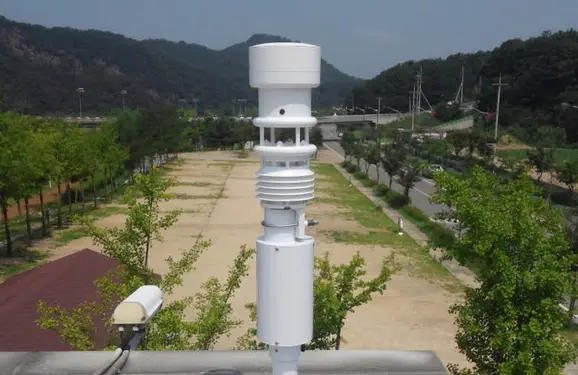
Smarter Weather Monitoring with Integrated Weather Sensors
Weather monitoring plays a critical role in environmental monitoring. Whether you’re managing a tailings storage facility, monitoring groundwater, operating a wastewater treatment plant, or collecting data for agricultural or research applications, local weather conditions provide essential context for understanding what’s happening on site.
Rainfall influences runoff and groundwater recharge. Wind influences dust dispersion and evaporation. Temperature and humidity impact biological processes, water quality, and equipment performance, while atmospheric pressure helps complete the picture of changing environmental conditions.
Without reliable weather data collected at the monitoring site itself, interpreting these measurements becomes significantly more difficult.
Traditionally, obtaining this information required multiple individual sensors installed across a weather station. Today, integrated weather sensors are simplifying that approach by combining several meteorological measurements into a single compact instrument.
The WS601 Smart Weather Sensor from Kipp & Zonen (OTT HydroMet) is one example of this new generation of weather monitoring technology, bringing together six essential weather measurements in a single, easy-to-deploy sensor.
Why Weather Monitoring Matters
Weather monitoring is about far more than simply recording local conditions. It provides the context needed to understand environmental processes and supports better operational decisions across a wide range of industries.
For example:
- Rainfall data helps explain fluctuations in groundwater levels, river flows, and reservoir storage.
- Wind speed and direction assist with dust management, air quality assessments, and evaporation studies.
- Temperature and humidity influence water quality, biological activity, and equipment performance.
- Atmospheric pressure supports meteorological observations and environmental modelling.
When weather data is collected alongside groundwater, water quality, flow, or geotechnical measurements, it provides a much clearer understanding of changing site conditions.
One Sensor, Six Essential Measurements
The WS601 continuously measures: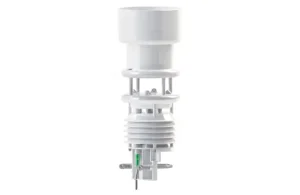
- Air temperature
- Relative humidity
- Atmospheric pressure
- Rainfall
- Wind speed
- Wind direction
Rather than installing several individual instruments, all six measurements are provided by a single integrated sensor, reducing installation complexity while delivering the information required for a wide range of environmental monitoring applications.
Why Integrated Weather Sensors Make Sense
Traditional weather stations have served the industry well for many years, but they often involve multiple sensors, mounting brackets, communication cables, and maintenance schedules.
Integrated weather sensors simplify this approach.
With fewer components to install and maintain, monitoring stations become easier to commission, require less wiring, and present fewer potential failure points over their operational life.
For organisations operating remote telemetry stations or distributed monitoring networks, these practical advantages can significantly reduce installation time and ongoing maintenance requirements.
Designed for Long-Term Reliability
Environmental monitoring equipment is often expected to operate continuously for years in challenging conditions. Whether installed at a mine, beside a river, on a dam wall, or within an agricultural field, reliability is just as important as measurement accuracy.
The WS601 incorporates several design features that support dependable long-term operation.
Integrated Rainfall Measurement
Rainfall is measured using an integrated tipping bucket rain gauge, a proven technology widely used in professional meteorological stations.
Its low power consumption makes it particularly well suited to remote installations powered by solar panels and battery systems.
Ultrasonic Wind Measurement
Instead of traditional cup anemometers and mechanical wind vanes, the WS601 uses ultrasonic technology to measure both wind speed and direction.
With no moving parts, mechanical wear is greatly reduced, helping minimise maintenance while providing reliable measurements throughout the sensor’s operating life.
Aspirated Radiation Shield
Accurate air temperature measurements depend on protecting the sensor from direct solar heating.
The integrated aspirated radiation shield helps minimise the effects of solar radiation, providing more representative air temperature and humidity measurements under varying environmental conditions.
Built for Harsh Environments
Designed for outdoor operation, the WS601 features an IP66-rated enclosure and operates across a temperature range of -50°C to +60°C.
These characteristics make it suitable for demanding environments, including mining operations, water resource monitoring sites, coastal installations, agricultural projects, and research stations.
Integrating Weather Monitoring into Modern Monitoring Networks
Collecting weather data is only one part of an effective monitoring programme. 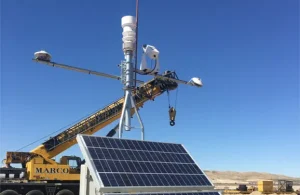 Equally important is integrating that information with other environmental measurements.
The WS601 supports industry-standard communication protocols, including SDI-12 and RS485, allowing it to connect easily with data loggers, SCADA systems, telemetry platforms, and cloud-based monitoring software.
At SME Monitoring, weather sensors are frequently deployed alongside groundwater instrumentation, multiparameter water quality sondes, flow monitoring equipment, and remote telemetry systems. Combining these datasets provides valuable context that helps environmental professionals better understand trends, identify anomalies, and make informed operational decisions.
Applications Across Multiple Industries
Because weather influences so many environmental processes, integrated weather sensors are used across a wide range of industries.
Water Resources
Weather monitoring supports rainfall-runoff modelling, groundwater investigations, flood monitoring, reservoir management, and evaporation studies.
Mining
Mining operations use weather data to support dust suppression, environmental compliance, water balance calculations, and the management of tailings storage facilities.
Agriculture
Local weather information assists with irrigation scheduling, frost monitoring, crop management, and improving the efficiency of agricultural operations.
Renewable Energy
When used alongside a solar radiation sensor, weather measurements such as air temperature, wind speed, and humidity provide valuable context for evaluating photovoltaic system performance and understanding how environmental conditions influence energy production.
Research and Environmental Monitoring
Universities, consultants, and government agencies rely on integrated weather stations to establish reliable, low-maintenance monitoring networks for long-term environmental and climate studies.
Simpler Installation, Lower Maintenance
One of the greatest advantages of integrated weather sensors is their simplicity.
Replacing multiple individual instruments with a single sensor reduces the number of mounting points, communication cables, and electrical connections required.
The result is:
- Faster installation
- Reduced cabling
- Lower maintenance requirements
- Smaller installation footprint
- Simplified servicing
- Improved long-term reliability
For remote monitoring stations where site visits can be expensive and time-consuming, these benefits contribute to a lower total cost of ownership throughout the life of the installation.
Looking Ahead
Environmental monitoring continues to evolve towards connected, intelligent monitoring networks where multiple datasets are combined to provide a more complete understanding of site conditions.
Weather monitoring forms an essential part of that picture.
Integrated weather sensors such as the WS601 simplify the collection of reliable meteorological data while reducing the complexity traditionally associated with weather stations. By combining six essential weather measurements into a single compact instrument, they provide a practical solution for organisations looking to improve the efficiency and reliability of their monitoring programmes.
Whether supporting groundwater investigations, mining operations, agriculture, renewable energy projects, or environmental research, accurate local weather data helps transform individual measurements into meaningful environmental insights.
Learn More
If you’re looking to incorporate weather monitoring into a new or existing environmental monitoring network, SME Monitoring can help you select the right instrumentation for your application.
Whether it’s a standalone weather station or a fully integrated solution combining weather, groundwater, water quality, flow, and telemetry, our team can assist in designing a system that delivers reliable, long-term environmental data.