


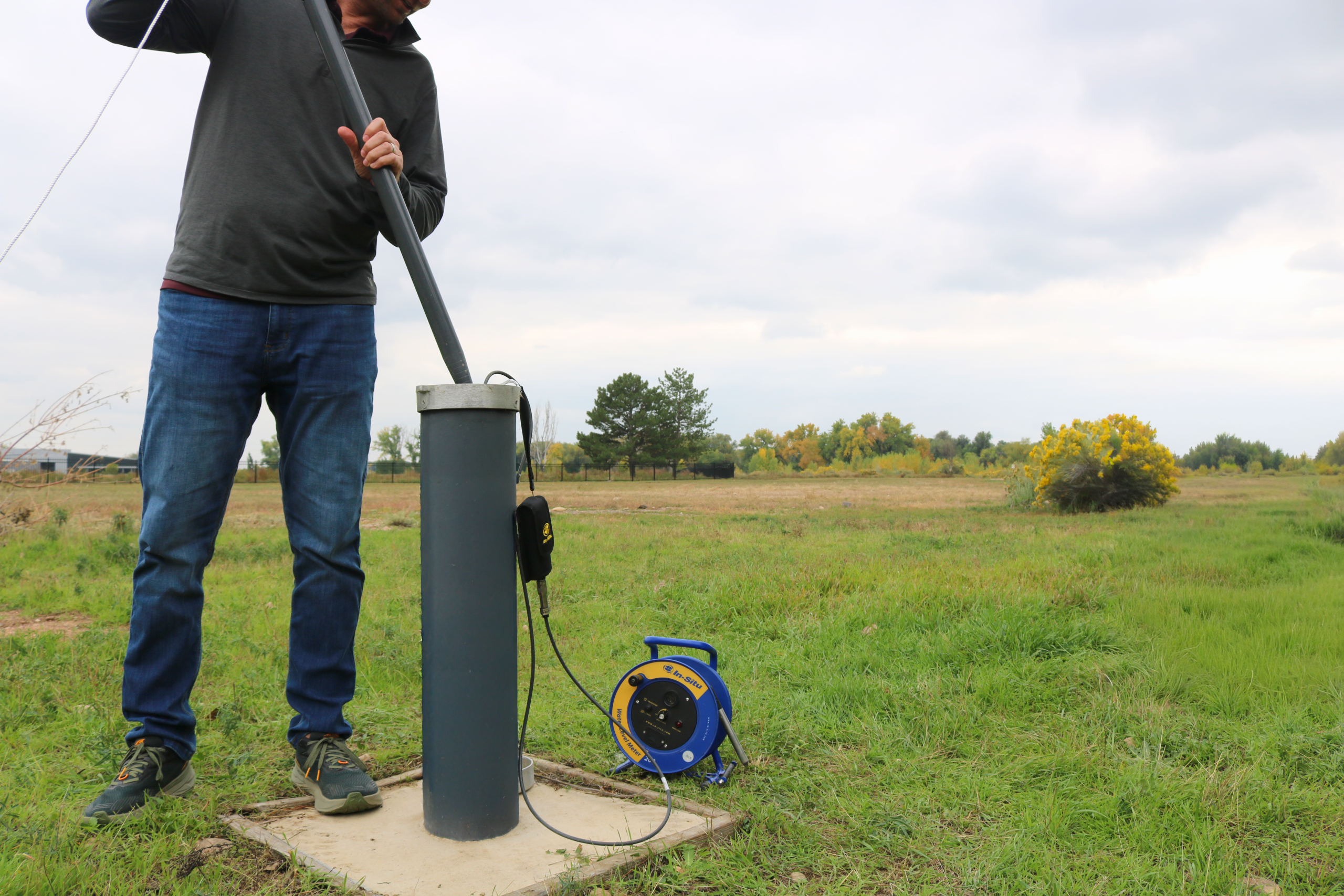
Hydraulic conductivity is one of the most important parameters in hydrogeology. It describes how easily water can move through soil, sediment, or rock and plays a critical role in groundwater resource assessments, contaminant transport studies, dewatering projects, and environmental monitoring. Solid slug testing is a simple, cost-effective field method that provides reliable estimates of hydraulic conductivity by observing how quickly groundwater levels recover after a controlled disturbance.
While pumping tests are often considered the gold standard for determining hydraulic properties, they can be costly, time-consuming, and impractical for many monitoring wells. This is where solid slug testing offers a valuable alternative.
Solid slug testing is a simple, cost-effective field method that provides reliable estimates of hydraulic conductivity by observing how quickly groundwater levels recover after a controlled disturbance.
What Is a Solid Slug Test?
A solid slug test involves rapidly inserting or removing a solid object, known as a slug, into a monitoring well. This creates an immediate change in water level within the well.
The groundwater system then responds as water flows between the well and the surrounding formation. By monitoring the rate at which the water level returns to equilibrium, hydrogeologists can estimate the hydraulic conductivity of the surrounding aquifer.
There are two common test configurations:
Falling Head Test (Slug-In)
A solid slug is quickly lowered into the well, causing the water level to rise.
Rising Head Test (Slug-Out)
A slug is rapidly removed from the water column, causing the water level to drop.
In both cases, the recovery curve contains the information needed to determine hydraulic conductivity.
Why Use Solid Slug Testing?
Solid slug testing has become a widely used technique because it offers several practical advantages:
- Minimal equipment requirements
- Fast field deployment
- Suitable for existing monitoring wells
- Lower cost compared to pumping tests
- Limited water disposal requirements
- Effective for site investigations and groundwater monitoring programmes
Because the test investigates conditions close to the well screen, it is particularly useful during well installation, aquifer characterization, and environmental site assessments.
Equipment Required for a Solid Slug Test
A successful slug test requires two key components:
- A method for creating the water level disturbance
- A method for accurately measuring the recovery response
Typical equipment includes:
- Solid slug (PVC, metal, or commercially manufactured)
- High-resolution pressure transducer (LevelTROLL 700)
- Communication interface and data logger (Vulink Cl)
- Mobile device or field computer (VuSitu)
- Water level meter (Dipmeter)
- Well cap or docking system to secure instrumentation
Modern pressure transducers such as the Level TROLL 700 are particularly well suited for slug testing because they can capture rapid water level changes with high accuracy and high sampling frequencies.
Choosing the Right Water Level Monitoring Instrument
Accurate data collection is critical during slug testing. Recovery can occur within seconds in highly permeable formations, making manual measurements difficult or impossible.
When selecting instrumentation, several factors should be considered:
Accuracy
Small water level changes can significantly influence calculated hydraulic conductivity values. High-accuracy pressure transducers provide more reliable datasets and reduce uncertainty during analysis.
Logging Frequency
Fast-response formations require rapid data collection.
Some pressure transducers can record measurements up to four times per second, ensuring that critical recovery data is not missed during the early stages of the test.
Data Management
Modern monitoring systems allow real-time visualisation, simplified logger configuration, and seamless export of data for analysis using hydrogeological software packages.
Preparing for a Solid Slug Test
Proper preparation is essential for obtaining meaningful results.
Before testing:
Verify Well Conditions
The well should be properly developed and free from obstructions that could affect water movement.
Measure Well Dimensions
Key measurements include:
- Total well depth
- Static depth to water
- Well casing diameter
- Slug dimensions
These measurements are required to calculate the expected water level displacement and ensure the test is appropriately designed.
Position the Pressure Transducer Correctly
The water level sensor should: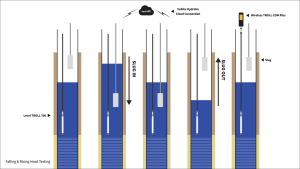
- Remain submerged throughout the test
- Avoid contact with the slug
- Be positioned above accumulated sediment
- Remain securely fixed to prevent movement-induced measurement errors
Allow sufficient time for thermal stabilisation before beginning the test.
Running the Test
Once the monitoring equipment is configured and logging has started, the slug is either inserted or removed in a single, smooth movement.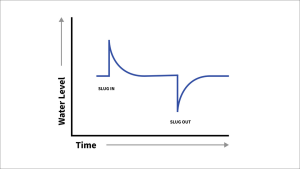
The objective is to create an almost instantaneous change in water level while minimising turbulence and unnecessary disturbance.
The pressure transducer records the recovery process continuously as groundwater flows between the formation and the well.
For moderate to low hydraulic conductivity formations, an initial displacement between approximately 0.3 m and 0.9 m often provides a suitable signal for analysis. In highly permeable formations, smaller displacements may help reduce turbulence effects.
Visualising and Analysing the Data
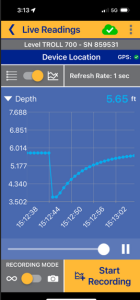 One of the major advantages of modern groundwater monitoring equipment is the ability to view data in real time during testing.
Field personnel can immediately verify that:
- The test was performed correctly
- Recovery behaviour appears reasonable
- Additional tests are required
Once the test is complete, the data can be downloaded and analysed using specialised hydrogeological software packages such as AQTESOLV or other groundwater analysis tools.
The resulting recovery curve is then matched to accepted analytical models to estimate hydraulic conductivity.
Best Practices for Reliable Results
To maximise data quality:
- Use a high-accuracy pressure transducer
- Secure all cables and equipment to prevent movement
- Ensure the slug does not strike the sensor
- Select an appropriate logging frequency
- Allow the instrument to stabilise before testing
- Conduct multiple tests where possible to verify consistency
Attention to these details can significantly improve confidence in the calculated hydraulic conductivity values.
Solid Slug Testing Remains a Valuable Hydrogeological Tool
Despite the availability of more sophisticated aquifer testing methods, solid slug testing remains one of the most practical approaches for estimating hydraulic conductivity in monitoring wells.
When combined with modern water level monitoring technology, the method provides a fast, economical, and reliable way to characterise groundwater formations without the complexity and expense of large-scale pumping tests.
For environmental consultants, hydrogeologists, mining operations, and water resource managers, solid slug testing continues to be an essential part of the groundwater investigation toolkit.