


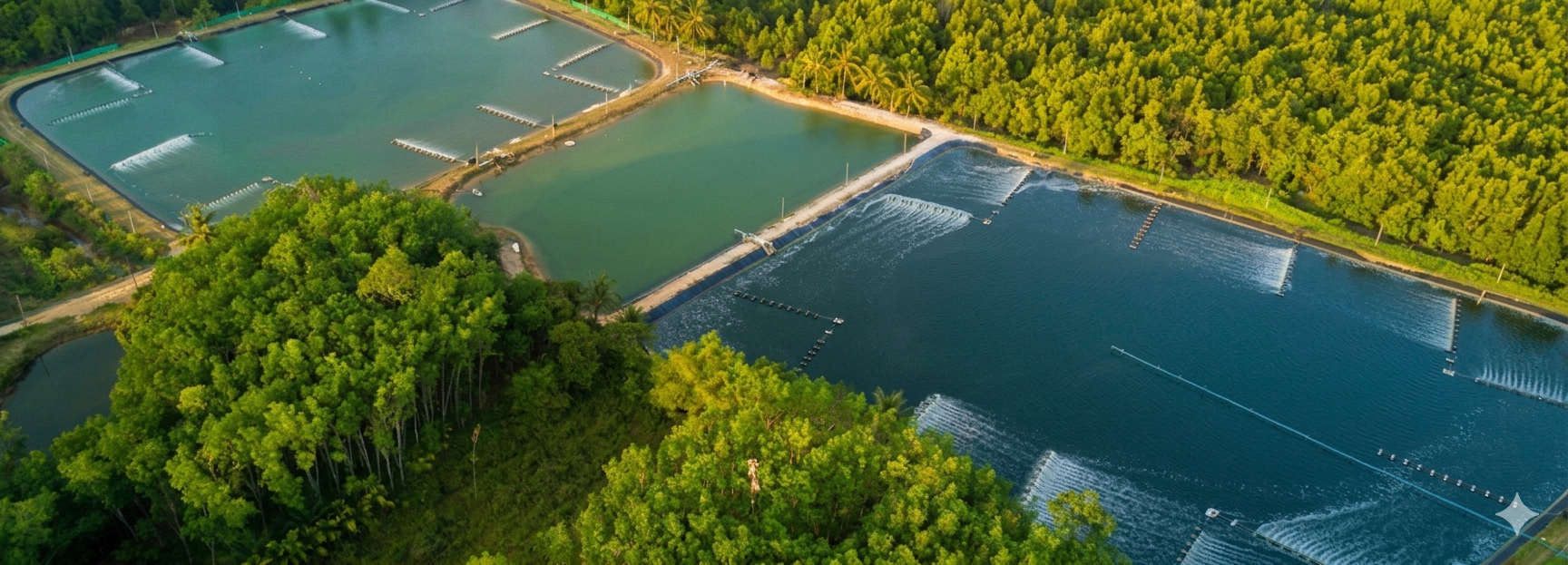
Pond Aquaculture Monitoring: Improve Yields with Real-Time Dissolved Oxygen Data
Introduction: When Water Quality Becomes a Business Risk
Why Dissolved Oxygen Monitoring Is Critical in Aquaculture
Dissolved oxygen (DO) is one of the most important parameters in any aquaculture system.
It directly affects:
- Fish respiration and metabolism
- Feeding behavior and growth rates
- Overall stock health and survival
Monitoring DO provides a clear indication of a water body’s ability to support aquatic life, including fish and beneficial bacteria .
From an operational perspective:
- Below ~3 mg/L → fish experience stress
- Below ~2 mg/L → risk of mortality increases
Maintaining stable DO levels is essential for consistent production.
What Causes Dissolved Oxygen Fluctuations in Ponds

- Diurnal cycles: Oxygen decreases at night when photosynthesis stops
- Temperature: Warmer water holds less oxygen while increasing biological demand
- Algal activity: Blooms and die-offs cause rapid DO swings
- Organic loading: Increased biological activity consumes oxygen
- Stratification and turnover: Can suddenly redistribute low-oxygen water
Without continuous monitoring, these fluctuations often go undetected until they impact stock.
Key Water Quality Parameters Beyond Dissolved Oxygen
While DO is critical, it does not operate in isolation.
pH Monitoring
pH affects nutrient availability, metal solubility, and toxicity. It also influences biological processes such as nitrification. For example, higher pH increases the proportion of toxic un-ionized ammonia (NH₃), while lower pH can suppress biological activity .
Temperature
Temperature directly affects oxygen solubility and fish metabolism. As temperature rises, oxygen availability decreases while demand increases.
Multi-Parameter Monitoring
Combining DO, pH, and temperature provides a complete view of pond conditions and enables more informed operational decisions.
From Manual Sampling to Real-Time Monitoring
This approach:
- Captures only isolated data points
- Misses critical events between measurements
- Delays response to changing conditions
Modern systems address these limitations through:
Continuous Measurement
Deployed sensors collect data at regular intervals, providing a complete and continuous picture.
Real-Time Access
Operators can access live data remotely via mobile or cloud platforms .
Spot Checks and Verification
Handheld tools allow for quick validation alongside continuous monitoring, ensuring confidence in field data.
How Real-Time Data Optimizes Aeration Efficiency
Aeration is essential for maintaining dissolved oxygen levels, but it is also one of the most energy-intensive processes in aquaculture.
Without real data, aeration is often based on fixed schedules or estimation.
With real-time monitoring:
- Aerators can be triggered using defined DO setpoints
- Oxygen levels remain within optimal ranges
- Over- and under-aeration are avoided
- Energy consumption is reduced
This transforms aeration from guesswork into a controlled, data-driven process.
Benefits of Continuous Aquaculture Monitoring Systems
Continuous monitoring delivers measurable operational advantages:
- Improved fish health and survival rates
- Reduced risk of sudden losses
- Faster response to environmental changes
- Reduced need for manual site visits
- Greater confidence in operational decisions
These systems provide not just data, but decision-quality insight.
Scaling Monitoring Across Multiple Ponds
 As aquaculture operations expand, managing multiple ponds becomes more complex.
- Centralized data collection across sites
- Cloud-based access from anywhere
- Scalable telemetry integration
This allows operators to maintain full visibility and control across entire operations.
Building a Reliable, Data-Driven Aquaculture Operation
Healthy ponds depend on consistent visibility into changing conditions.
Effective monitoring solutions provide:
- Continuous, high-quality data
- Fast-response sensors for early issue detection
- Durable instrumentation suited for harsh environments
- Reduced calibration requirements with optical DO technology
These capabilities ensure stable conditions and reliable operation in real-world environments .
A Practical Approach to Connected Aquaculture Monitoring
A connected approach typically includes:
 Multiparameter Field Measurement
Sondes such as the Aqua TROLL platform provide continuous, in-pond measurement of dissolved oxygen, pH, temperature, and other key parameters.
Seamless Data Delivery
Telemetry systems like VuLink enable automatic data transmission from remote locations, ensuring that changing conditions are visible in real time.
 Integrated Data Access
Connected software platforms bring all measurements into a single interface, allowing operators to monitor trends, manage multiple ponds, and respond quickly.
Together, this type of ecosystem moves aquaculture monitoring from isolated measurements to continuous, decision-ready insight.
Conclusion: From Monitoring to Control
Aquaculture success depends on maintaining stable, optimal water quality conditions at all times.
Dissolved oxygen monitoring plays a central role, providing the insight needed to manage risk, optimize aeration, and protect stock.
By combining continuous measurement, real-time access, and reliable instrumentation, operators can shift from reactive management to proactive control.
And in doing so, turn data into a measurable operational advantage.
Call to Action
If your operation still relies on periodic sampling and manual intervention, it may be time to rethink your monitoring approach.
Access reliable, accurate data. Gain full visibility. Take control of your aquaculture operation.